
Do I Need a Lawyer for a Misdemeanor in Georgia?
A misdemeanor in Georgia can mean up to 12 months in jail, fines, and a permanent record. Learn when you need a lawyer and why hiring one early matters.
If you’ve been charged with a misdemeanor in Georgia, it’s natural to wonder whether you really need a lawyer. After all, it’s “just a misdemeanor,” right? Many people assume they can show up to court, pay a fine, and move on with their lives.
The reality is more complicated. A misdemeanor conviction in Georgia can carry jail time, probation, fines, and a criminal record that follows you for years. Before you decide to handle your case alone, it’s important to understand what’s at stake.
What Is a Misdemeanor in Georgia?
In Georgia, a misdemeanor is any crime that is not a felony. Under Georgia law, a standard misdemeanor is punishable by up to 12 months in jail and a fine of up to $1,000. Some offenses are classified as misdemeanors “of a high and aggravated nature,” which can carry fines of up to $5,000 and harsher jail conditions.
Common misdemeanors in Georgia include:
- DUI (first and second offenses)
- Simple battery and family violence battery
- Shoplifting (theft by shoplifting under $500)
- Possession of less than one ounce of marijuana
- Driving on a suspended license
- Disorderly conduct
- Criminal trespass
- Reckless driving
These charges may seem minor compared to felonies, but each one can have real and lasting consequences.
The Hidden Consequences of a Misdemeanor Conviction
The sentence a judge hands down is only part of the picture. A misdemeanor conviction can affect your life long after you’ve paid the fine or finished probation.
A permanent criminal record. Georgia does not automatically clear misdemeanor convictions. A conviction can show up on background checks run by employers, landlords, and schools.
Employment and professional licenses. Many employers screen out applicants with criminal records. If you hold a professional license, such as in nursing, teaching, real estate, or commercial driving, a conviction may need to be reported and could put that license at risk.
Driver’s license consequences. Certain misdemeanors, including DUI and some drug offenses, can lead to a driver’s license suspension. For DUI arrests, you may have only 30 days to act to protect your driving privileges.
Immigration consequences. For non-citizens, even a misdemeanor conviction can affect immigration status.
Higher penalties later. A prior conviction can increase the penalties you face if you are ever charged again. A second DUI, for example, carries mandatory jail time.
Family and custody matters. A family violence conviction can affect custody, firearm rights, and protective order proceedings.
Can I Represent Myself on a Misdemeanor Charge?
You have the legal right to represent yourself in Georgia. But doing so puts you at a real disadvantage. The prosecutor handling your case knows the law, the local court procedures, and how to build a case against you. Without a lawyer, you may not know:
- Whether the police had a legal reason to stop, search, or arrest you
- Whether the evidence against you can be challenged or suppressed
- What deadlines apply to your case
- What a fair plea offer looks like in your county
- Whether you qualify for programs that could keep a conviction off your record
Many people who go it alone simply plead guilty at their first court date because it seems like the fastest way to get it over with. That decision can create a permanent record that might have been avoided.
How a Defense Lawyer Can Help With a Misdemeanor
An experienced criminal defense attorney does much more than stand beside you in court. A lawyer can:
Review the evidence. Your attorney will look at police reports, body camera footage, test results, and witness statements to find weaknesses in the case.
Challenge illegal stops and searches. If police violated your constitutional rights, evidence may be excluded. That can lead to reduced charges or a dismissal.
Negotiate with the prosecutor. A lawyer may be able to get charges reduced to a less serious offense or secure a better sentence.
Pursue alternatives to conviction. Georgia offers options such as pretrial diversion, First Offender treatment, and conditional discharge for certain drug offenses. These can help you avoid a conviction on your record if you qualify and complete the program.
Help with record restriction. If your case is dismissed or you complete certain programs, a lawyer can help you pursue record restriction, Georgia’s version of expungement.
Protect your driver’s license. In DUI cases, a lawyer can help you meet the deadline to protect your license and pursue a limited driving permit.
Why Hiring a Lawyer Early Matters
The sooner you have a lawyer, the more options you usually have. Early representation lets your attorney preserve evidence, meet important deadlines, and start working on your defense before your first court date.
Hiring early can also give you more financial flexibility. At MM Criminal Defense, we offer affordable payment plans when we can. Those options are often more available when you reach out early, rather than after your case has been pending for a while.
What If I Can’t Afford a Lawyer?
If you are facing possible jail time and cannot afford an attorney, you may qualify for a public defender. Eligibility depends on your income and resources. If you don’t qualify, or if you would prefer to choose your own attorney, a private criminal defense lawyer may be more affordable than you think.
Talk to a Georgia Misdemeanor Defense Lawyer
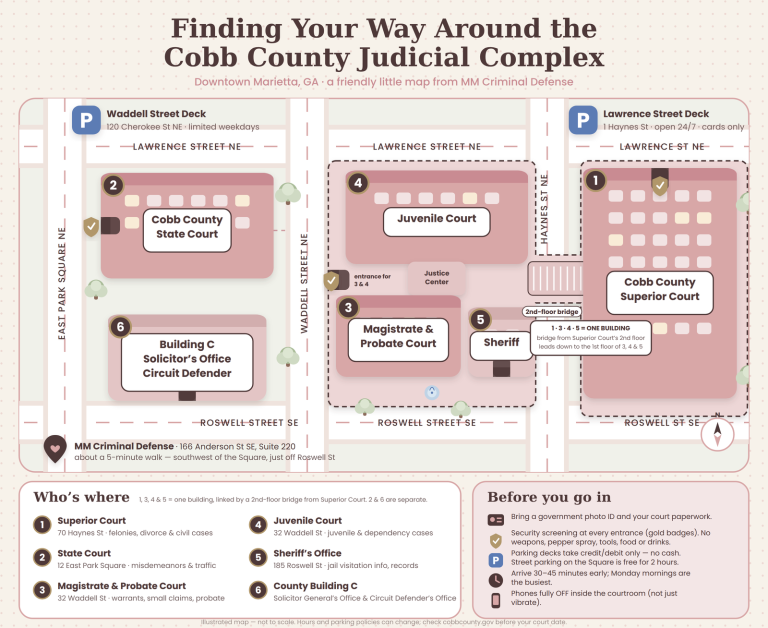
A misdemeanor charge is serious, and you don’t have to face it alone. At MM Criminal Defense, we represent people charged with misdemeanors throughout Cobb County and the surrounding metro Atlanta area. We will explain your options, answer your questions, and fight to protect your record and your future.
Contact MM Criminal Defense today to schedule a consultation. Our office is located at 166 Anderson St. SE, Suite 220, Marietta, GA 30060.
This article is for general information only and is not legal advice. Every case is different. Contact an attorney to discuss your specific situation.